


EMDR Therapy in Boca Raton
virtually throughout Florida & Texas
You’re Stuck — And you Don’t Have To Be
A lot of the people I work with do not think of themselves as having trauma. They tell me nothing that bad happened. They just cannot figure out why a delayed text sends their heart racing, why they apologize for things that are not their fault, or why they feel like they are bracing for something even on good days.
When we slow it down, there is almost always a story underneath. Not one terrible moment, but years of small ones. A parent who was there but not really there. Love that felt conditional. Growing up feeling like you had to earn your place, or hide part of who you were to keep it. That is what complex trauma and attachment injuries often look like, and it is the work I care about most.
I use EMDR to help your brain finish processing what it never got the chance to. The goal is not to erase your history. It is to make it feel like something that happened to you, instead of something that keeps happening inside you.
What EMDR Is and Why It Works Differently
EMDR stands for Eye Movement Desensitization and Reprocessing. It is built on the idea that painful experiences can get stored in the brain without being fully processed, so they keep firing with the same emotions, body sensations, and beliefs they had the first time. That is why an old memory can still make your chest tighten, or why "I am not enough" can feel like a fact instead of a thought.
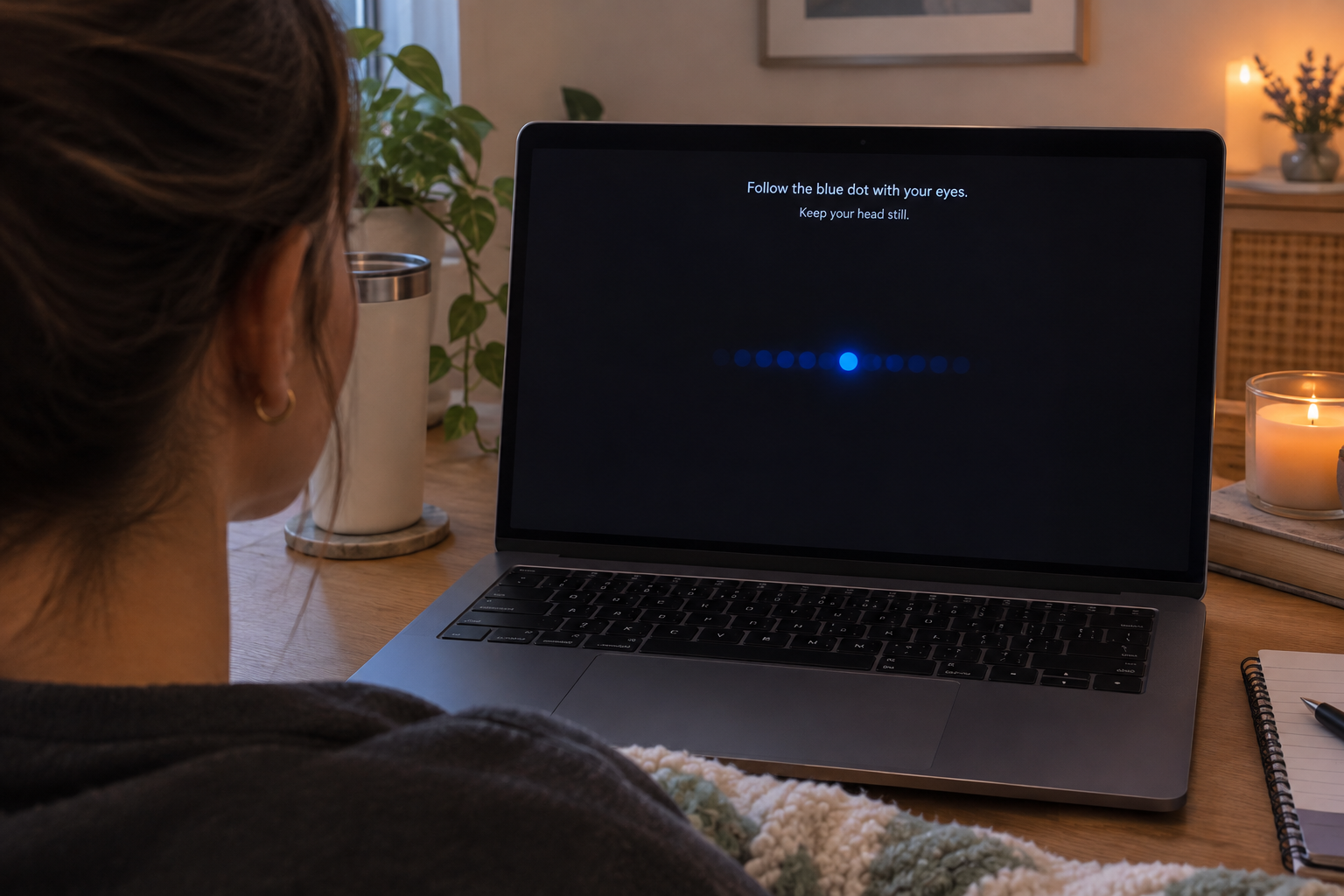
In EMDR, you hold a piece of that memory in mind while following bilateral stimulation, using eye movements or alternating taps (whatever you are more comfortable with). Your brain does the reprocessing. My job is to guide it, keep you grounded, and make sure you never feel like you are drowning in it.
The World Health Organization recommends EMDR as one of only two psychotherapies for PTSD in children, adolescents, and adults. Part of what makes it different is that it does not rely on retelling every detail of what happened, arguing with your own beliefs, staying in the memory for long stretches, or homework between sessions (WHO, 2013). For people who have spent years talking about their past without feeling any different, that matters.
EMDR for Complex Trauma and Attachment Injuries
Single-incident trauma, like a car accident, has a clear before and after. Complex trauma does not. It builds over time, usually in relationships you depended on, and it shapes how you see yourself, how you handle emotions, and how safe closeness feels.
Attachment injuries are the relational version of that. They happen when someone you needed was not there in a moment that mattered, or when the person who was supposed to make you feel safe was also the source of fear. They show up later as a fear of abandonment, a habit of shutting down, a pull toward partners who feel familiar in all the wrong ways, or a deep sense that needing people is dangerous.
Here is something the research is honest about. In one of the best-known EMDR trials, 75% of people with adult-onset trauma were symptom-free six months after brief treatment, compared to 33% of people whose trauma began in childhood (van der Kolk et al., 2007). Childhood trauma is layered, and eight sessions is often not enough to reach all of it.
The good news is that you do not have to spend months getting "stable enough" before we start. A randomized trial of 121 adults with PTSD from childhood abuse found that EMDR alone worked at least as well as EMDR preceded by a skills-building phase, with no difference in dropout (van Vliet et al., 2021). So my approach is both. We do not wait forever, and we also do not rush. We move at the pace your nervous system can actually hold, and we take the time complex trauma needs.

What I Use EMDR to Help With
-
![Complex trauma and C-PTSD]()
Complex trauma and C-PTSD
-
![Attachment wounds]()
Attachment wounds
-
![Anxiety and panic]()
Anxiety and panic
-
![Relationship Anxiety]()
Relationship Anxiety
-
![Betrayal Trauma]()
Betrayal Trauma
-
![Shame and low self-worth]()
Shame and low self-worth
-
![people pleasing and perfectionism]()
people pleasing and perfectionism
-
![Single-incident and shock trauma]()
Single-incident and shock trauma









EMDR with me does not start with eye movements. It starts with me actually getting to know you. Your history matters, but so does what makes you laugh, what you are proud of, and what you have already survived. I need to understand who you are outside of your hardest moments before we go anywhere near them.
My style is laid back but intentional. Sessions feel like a real conversation, not a clinical checklist, and there is room for humor even when the work is heavy. Underneath that, everything I do has a purpose. I am tracking the patterns you keep circling back to, the beliefs that show up in how you talk about yourself, and the moments your body reacts before your words do. Those are the threads we follow to find where you are stuck.
From there, the work moves through three stretches:
1. Getting to know your story. We map out what brings you in and the memories connected to it, at a pace that feels manageable.
2. Building your footing. I teach you ways to calm your body and come back to the present, so you know you can always find your way out of a hard moment.
3. Desensitizing & Reprocessing. We target specific memories with bilateral stimulation while I stay right there with you. I then help you move past negative beliefs holding you back and use bilateral stimulation to help you truly believe what you have been wanting to believe about yourself for so long. Every session closes with grounding, so you are not walking out raw.
I have watched a client reprocess a memory they had carried for twenty years in a single session. That is not everyone's experience, and complex trauma usually takes more time. But this shows what EMDR can do when the brain finally gets the chance to finish what it started. Clients often describe it as the memory feeling further away, or an old belief simply not ringing true anymore.
What EMDR Actually Looks Like with Attached Counseling

Frequently Asked Questions
-
No. EMDR does not require you to retell every part of what happened. You hold a piece of the memory in mind, and your brain does much of the work. You stay in control of what you share.
-
Yes. My clinical experience is with complex trauma and attachment wounds, which come from patterns over time rather than one event. We often start with what you feel now and trace it back.
-
It depends. A single recent event may need fewer sessions. Complex or childhood trauma usually takes longer because there are more layers. We will check in regularly about progress.
-
Evaluations of online EMDR show meaningful symptom improvement, and many clients find it easier to do this work from home. I offer both online sessions across Florida and Texas and in-person sessions in Boca Raton.
Intensives are an accelerated approach to couples therapy with more structure and dedicated time built specifically around your relational needs. They take place on weekends and typically run three to four hours per session over two to four weekends, though the structure is always shaped by what I believe would be most beneficial for where you and your partner are in the process.
-
Yes. Research shows EMDR can reduce anxiety, panic, and phobia symptoms, especially when the anxiety is tied to earlier experiences.
-
Some people feel tired or emotional after a session, and memories can surface between sessions. I end every session with grounding, and we build coping tools before reprocessing begins.
-
Yes. As a lesbian therapist, I work with many clients carrying trauma from rejection, religious environments, or years of hiding who they are.
Start EMDR Therapy with a 15- minute Consultation
Your History Does Not Have to Run the Show
If you have spent years understanding exactly why you are the way you are and still feel stuck, that is not a failure on your part. Insight lives in one part of the brain. Old fear lives in another. EMDR is one of the ways we help those two parts finally talk to each other.
I offer EMDR in person in Boca Raton upon request for clients in Palm Beach and Broward counties, including Fort Lauderdale, Delray Beach, Parkland, and Coral Springs. I also offer online EMDR anywhere in Florida and Texas, from Miami and Tampa to Houston, Dallas, and Austin.
People are often surprised that EMDR works over telehealth video sessions. Online, bilateral stimulation can be done with a moving dot on your screen or with self-tapping. An evaluation of 93 people who received online EMDR found meaningful symptom improvement, and a therapist's level of experience did not affect how well it worked online (McGowan et al., 2021, via EMDR Association UK).
For many of my clients, doing this work from a space that already feels safe, like their own couch, is part of what makes it possible.










Most couples walk into therapy thinking the same thing: Is this the beginning of the end? It's not. For most of the couples I work with, it's the beginning of the relationship they've always wanted — they just weren't sure how to get there yet. In this post, I'm breaking down exactly what to expect in online couples therapy, from our first session together to the moment things actually start to shift. If you're a couple in Florida or Texas who's been on the fence, this one's for you.