

Online Couples Therapy in Fort Lauderdale that Actually Works
Couples therapy is not an admission that something is wrong. It is proof that something matters.
You probably did not plan to end up here. Maybe you were scrolling late at night, or one of you finally said out loud what the other had been thinking for months. And now here you are, looking at a couples therapist website with a quiet voice in the back of your head asking — does searching for this mean this is the end? What if therapy does not even work? What if I pay a stranger a lot of money and they just tell us what we already know?
First of all, I am glad you are here. And I want to ease your mind a little.
Couples therapy has carried a lot of stigma for a long time. Only recently have couples started considering it before they are already on the edge. The truth is the couples who come in early, before the resentment has calcified and the distance feels permanent, tend to do the best work. You being here is not a sign your relationship is over. It might actually be one of the smartest things you do for it.
At Attached Counseling I help Fort Lauderdale couples understand what is actually happening underneath the conflict — and learn how to reach each other in a way that lasts. Not just getting back the spark you had at the beginning, but building something deeper than that. The kind of connection that actually holds.
How I work…

I am not here to sell you a dream or make promises. Just facts and a little bit of hope.
Most couples I work with are not falling apart. They are stuck in a cycle that has a hundred different surface arguments but almost always comes down to the same thing underneath — two people who stopped feeling safe enough to actually hear each other. That pattern has a name in EFT. We are going to find yours, slow it down, and start moving through it differently.
The approach I use is Emotionally Focused Therapy, developed by Dr. Sue Johnson with decades of attachment research. The numbers are worth knowing: 70 to 73% of couples recover from relational distress through EFT, and 90% report significant improvement in their relationship (Johnson et al., 1999). What I find equally important is that couples continued to improve significantly after therapy ended — this is not a temporary fix.
Our work together is not about getting back the spark you had at the beginning. It is about building something new and more sustainable than that — the kind of trust and closeness that actually holds when life gets hard.
If that is what you are looking for, I would love to connect.

Why Couples Therapy is a necessity in a place like Fort Lauderdale
Where you live matters to your relationship. Not as an excuse, but as a real clinical factor.
Fort Lauderdale is a genuinely beautiful place to build a life. It is also relentless. A single adult in the Miami-Fort Lauderdale-West Palm Beach metro needs to earn at least $118,000 annually to live comfortably, while average incomes hover around $43,000. That gap does not stay in the bank account (WLRN News Staff)
Research is unambiguous about what happens when it does. When one partner experiences external stress, those emotions spill over into the relationship, impeding positive interactions and making communication significantly harder. The partner who snaps over something small is not a bad partner. They are a depleted one. Urban couples specifically carry a layered stress profile — financial pressure, work demands, parenting stress, and daily hassles — all operating simultaneously and all quietly eroding relationship quality over time (Randall and Bodenmann, 2009).
Fort Lauderdale adds its own texture to that. The traffic. The transplant isolation of being far from family. The image of a city that rewards how things look while relationships quietly starve for actual attention. None of that arrives as one identifiable crisis. It arrives as months of coming home too depleted to really show up, conversations that keep going sideways, a distance neither partner can quite name.
That is exactly what therapy with me is designed to untangle. Not because something is broken, but because the environment you are building your relationship inside is genuinely demanding — and having a space to understand what is happening between you, separate from what is happening around you, changes everything.
Areas Served
While all sessions are held online, I work with couples across South Florida — including Fort Lauderdale, Plantation, Coral Springs, Pompano Beach, Davie, Weston, Margate, Hollywood, Boca Raton, and throughout Broward and Palm Beach County. Online therapy means you don't have to fight South Florida traffic to get the support your relationship deserves. Wherever you are in the state, if you're licensed in Florida, we can work together.
I Help Couples Work Through
-
![Infidelity and Betrayal Recovery in Fort Lauderdale]()
Infidelity and Betrayal Recovery
-
![Couples therapy for Communication Breakdown in Fort Lauderdale]()
Communication Breakdown
-
![Attached Counseling helps Couples with Emotional Disconnection with Couples Therapy]()
Emotional Disconnection
-
![Couples Therapy for Intimacy and Desire Differences and sex issues in Fort Lauderdale]()
Intimacy and Desire Differences
-
![Couples Therapy for High Conflict and Anger Cycles]()
High Conflict and Anger Cycles
-
![Couples Therapy in Fort Lauderdale for couples growing Apart]()
Growing Apart
-
![Couples Therapy for Life Transitions in Fort Lauderdale]()
Life Transitions






Your Relationship's Not Broken - It's Stuck
〰️
Your Relationship's Not Broken - It's Stuck 〰️
A lot of couples come in not knowing what to expect, which is completely understandable. Let me explain.
The Intake Process
Our first session is a joint session where I get to meet you both and start to understand what brought you here. From there I meet with each of you individually, one session per partner. These individual sessions give me a clearer picture of your personal history, what you are each carrying into the relationship, and what this relationship means to you beneath the surface-level conflict. By the time we come back together for our fourth session, I already have a map. That is when the real work begins.
Stage 1: De-escalating your Disconnection to Build Connection
Most couples are not fighting about what they think they are fighting about. The argument is about dishes or money or how you spoke to me on Tuesday, but underneath it is almost always the same loop — one partner reaches, the other pulls back, both feel unseen, and nobody knows how to stop it. In EFT we call this the negative interactional cycle, and the entire goal of Stage 1 is to make this pattern visible. When you can both can name the cycle you will start to feel that your partner is no longer the enemy — the cycle is.
Stage 2: Restructuring your Bond
Once the cycle slows down, we go deeper. Stage 2 is where partners begin to access and share the vulnerable emotions that were always underneath the conflict but never felt safe enough to say out loud. This is the stage where we start to rewrite the emotional experience between you. One partner risks saying something vulnerable. The other learns to receive it in a new way. That exchange, small as it might look from the outside, is where actual change happens.
Stage 3: Consolidation
The final stage is about making what you have built together stick. By this point your cycle has lost its grip, and partners have experienced what it feels like to actually reach each other. Life in Fort Lauderdale does not slow down — the financial pressure, the pace, the distance from family — but by the end of this stage you have something more resilient than you came in with. Not the relationship you had at the beginning. Something better.

Frequently Asked Questions
-
If I had a penny for every time I was asked this question on consultation calls, I would have a lot of pennies. In my experience it is not about problems going too far. It really comes down to whether you and your partner truly want your relationship to work. My most successful couples are not the ones who do not fight. They are the couples that no matter what they have gone through or put each other through, they are committed to the process of healing their relationship. Though to be clear, I am not referencing relationships with active abuse.
-
This truly depends on your relationship. For long lasting change it is important that we allow the therapeutic process to move as slowly as it needs to. I often describe our work together like climbing a staircase where we start on step one. The goals you are hoping to achieve might be on step ten of a twelve step staircase, and I will often share with my couples exactly what step I believe we are on together. Sometimes we think we are on the last step and then the deeper we go into repairing emotional wounds, the more we realize there are a few more steps ahead. This is especially true for couples in Fort Lauderdale where the pace of city life adds its own unique layer to the work.
-
Most couples counseling focuses on communication skills — learning to fight better, use "I statements," take turns listening. Those tools are not useless, but they tend to stay on the surface. Emotionally Focused Therapy goes underneath the argument to the emotional experience driving it. Instead of teaching you scripts and “good communication” , Emily helps and guides you to have conversations that lead to transformational change and connection. EFT has decades of attachment research behind it and some of the strongest outcome data in the couples therapy field. It is not a quicker fix, but it tends to create changes that actually last.
-
All of my regular sessions are 50 minutes and held online. However I am now offering Couples Therapy Intensives in person for Fort Lauderdale couples. If you are interested in intensives, feel free to ask me about it during our consultation.
Intensives are an accelerated approach to couples therapy with more structure and dedicated time built specifically around your relational needs. They take place on weekends and typically run three to four hours per session over two to four weekends, though the structure is always shaped by what I believe would be most beneficial for where you and your partner are in the process.
-
Attachment theory, developed by John Bowlby and later applied to adult relationships by Dr. Sue Johnson, is the idea that human beings are wired to need a safe emotional bond with the people closest to them. When that bond feels secure, we can handle almost anything. When it feels threatened we go into protection mode. We pursue, we withdraw, we attack, we go quiet. What looks like a personality clash in a relationship or compatibility issue is often two attachment systems doing exactly what they were designed to do. Understanding your attachment patterns does not excuse the behavior. It explains the behavior, which is where change actually starts (Bowlby, 1969; Johnson, 2004).
-
It is completely understandable for a partner to be skeptical or hesitant about starting couples therapy. I am always open to having a conversation with partners who are on the fence during our consultation call.
With that being said, I am not here to convince anyone to begin therapy. My objective as a couples therapist is to ensure that both partners genuinely want to be in the room. If that is not the case and partners are coming in with different agendas, couples therapy can actually be harmful to the relationship and to the partner who is invested in the process. If I notice that dynamic I will name it directly and recommend discontinuing services until both partners are ready.
-
I am a private pay practice and do not accept insurance directly. Sessions are $150 for a 50-minute session.


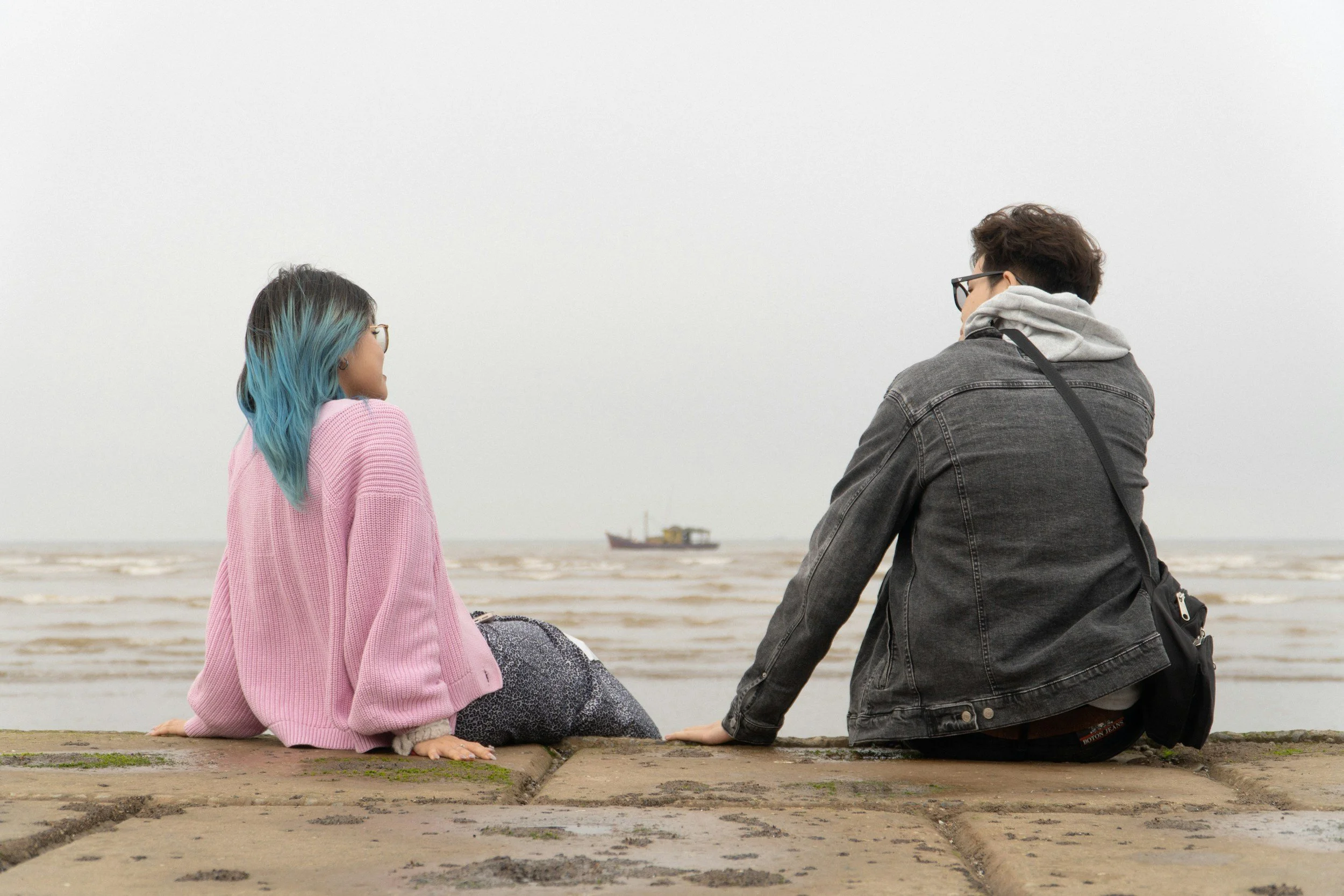







Most couples walk into therapy thinking the same thing: Is this the beginning of the end? It's not. For most of the couples I work with, it's the beginning of the relationship they've always wanted — they just weren't sure how to get there yet. In this post, I'm breaking down exactly what to expect in online couples therapy, from our first session together to the moment things actually start to shift. If you're a couple in Florida or Texas who's been on the fence, this one's for you.