

Key points
Emotional abuse in a relationship is a repeated pattern of behavior used to control, demean, isolate or frighten a partner.
Emotional abuse can cause post-traumatic stress symptoms. In one study, 34.5% of women who experienced psychological abuse alone from a partner met criteria for PTSD.
A 2022 review of 149 studies found psychological violence in relationships strongly associated with PTSD, and also linked to depression and anxiety.
The effects often continue after the relationship ends, showing up as self-doubt, hypervigilance, quick apologies or freezing during conflict.
These responses are understandable adaptations, and trauma-focused therapy, including EMDR, can help.
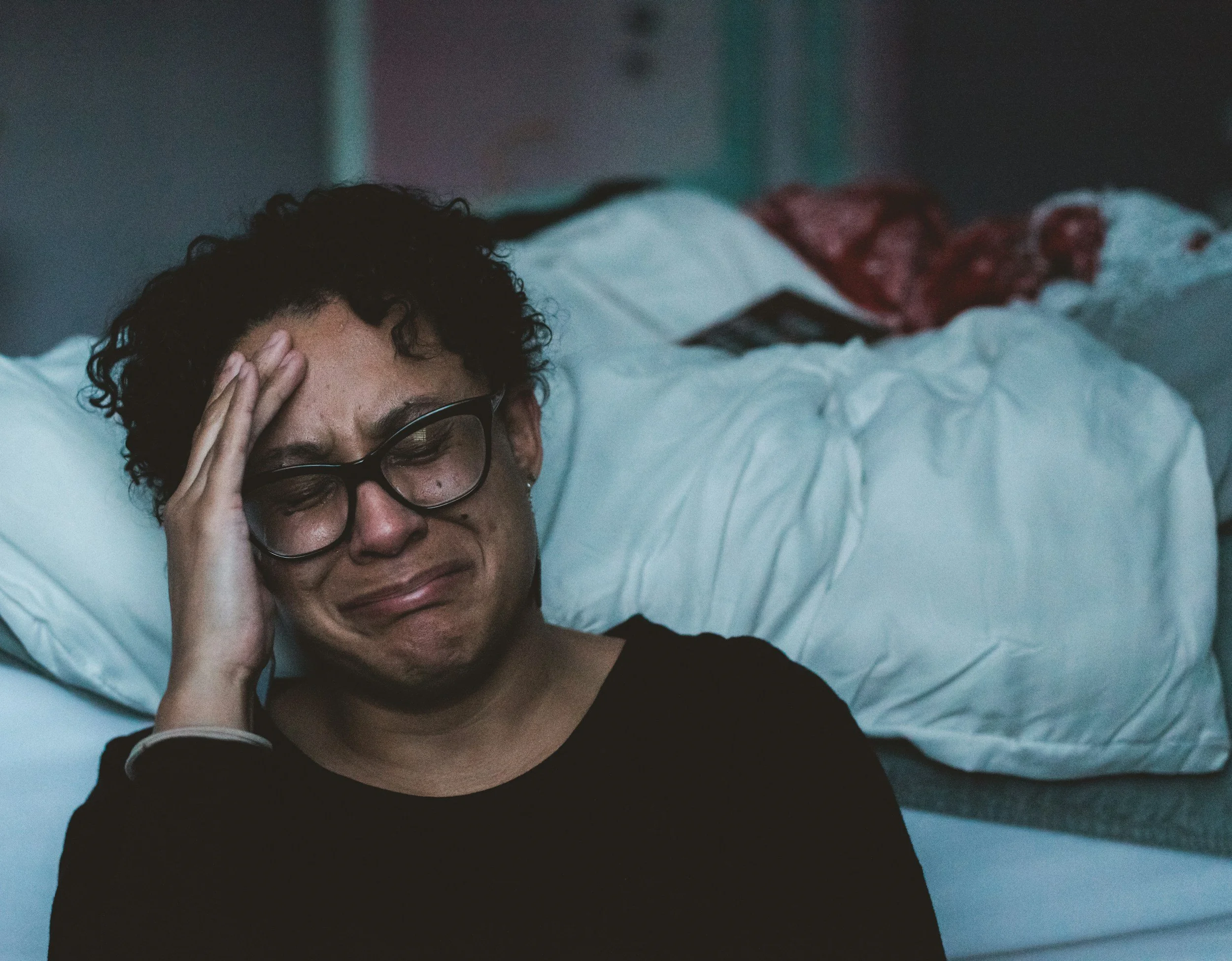
If you are asking whether a former partner was emotionally abusive, you may have spent a long time talking yourself out of the question. Perhaps there was no physical violence. Perhaps there were good days, apologies, and moments of real tenderness mixed in with the hurt. Perhaps you still wonder whether you were simply too sensitive.
Those doubts are common after emotional abuse, and they are often part of what the abuse left behind. This article is written for anyone looking back on a past relationship and trying to make sense of it. It is not meant to diagnose you or your former partner. It is meant to give language to an experience that can be very hard to name, and to explain why its effects may still be with you now.
What emotional abuse in a relationship looks like
Emotional abuse, also called psychological abuse, is a repeated pattern of behavior one partner uses to control, diminish, isolate or frighten the other. It can include:
Frequent criticism, ridicule or name-calling, including "jokes" at your expense
Monitoring your phone, location, spending or friendships
Gradually cutting you off from friends or family
Threats, intimidation, or using silence as punishment
Denying things you clearly remember, or insisting you are overreacting
Blaming you for their anger or their choices
What separates emotional abuse from ordinary conflict is the pattern. All couples argue, and most people say things they regret. In an emotionally abusive relationship, the hurtful behavior repeats, power consistently sits with one partner, and the other partner gradually reshapes their own behavior to avoid the next conflict.
Signs it may still be affecting you
The end of the relationship does not always mean the end of its effects. Many of the patterns below develop as ways to stay safe in a relationship that did not feel safe. They are understandable responses, not personal failings.
You doubt your own memory and perceptions
When a partner repeatedly tells you that what you saw or heard did not happen, it is common to keep second-guessing yourself long after the relationship ends. You might replay conversations, save screenshots, or check with others before trusting your own account.
You stay on high alert to other people's moods
Hypervigilance is the clinical term for staying tuned to possible signs of danger. In daily life, it can look like reading a room before you speak, or feeling a jolt of panic at a short text or a change in someone's tone.
You apologize or take the blame quickly
Apologizing quickly may once have been the fastest way to lower tension. Even now, "sorry" may come out before you know whether anything actually went wrong.
You shut down during conflict
Raised voices, criticism, or even mild disappointment from a new partner may lead you to go quiet, agree to anything, or feel numb and far away. This is a protective response of the nervous system, not a lack of caring.
Kindness feels hard to trust
When affection was once followed by criticism, gentleness can feel suspicious. You may find yourself waiting for the catch, or feeling more at ease with criticism than with care.
Anger in others makes your body freeze
Even anger that has nothing to do with you can bring on a racing heart, a blank mind, or an urge to leave. Your body learned that anger meant danger, and it may still react that way.
Are you needing a therapist to work through the trauma you experienced in an emotionally abusive relationship?
Can emotional abuse cause post-traumatic stress symptoms?
Emotional abuse can cause post-traumatic stress symptoms, including intrusive memories, nightmares, avoiding reminders of the relationship, feeling constantly on guard, and lasting changes in how you see yourself and others.
Research supports this. A study of women in Spain compared those who had experienced only psychological abuse from a partner, those who had experienced both psychological and physical abuse, and women with no abuse history (Pico-Alfonso et al., 2006). Among women who experienced psychological abuse alone, 34.5% met criteria for PTSD, compared with none of the women who had not been abused. Their depression scores were also significantly higher. When the researchers examined every type of abuse together, psychological abuse was the only significant predictor of PTSD.
A larger 2022 review that pooled 149 studies found that psychological violence in relationships was strongly associated with PTSD, with meaningful associations with depression and anxiety (Dokkedahl et al., 2022). The authors rated the certainty of the evidence as low because most studies could not establish cause and effect, but the pattern across studies was consistent.
One clinical note. A formal PTSD diagnosis requires exposure to "actual or threatened death, serious injury, or sexual violence" (American Psychiatric Association, 2013), and emotional abuse on its own does not always meet that definition. This is a diagnostic distinction, not a judgment about how much you were hurt. Your symptoms are real whether or not a diagnosis fits, and they respond to trauma therapy for emotional abuse.
Why emotional abuse is hard to recognize
Emotional abuse rarely begins in an obvious way. Relationships often start with warmth and closeness, and the hurtful behavior increases slowly, mixed with apologies and good days. Because there are no visible injuries, friends and family may not have noticed, or may have minimized what you told them.
Attachment research helps explain why it can be so hard to see clearly from the inside. When the person causing harm is also the person you rely on for closeness and comfort, the mind has strong reasons to explain the harm away. Self-blame can feel more bearable than recognizing that someone you loved was not safe. That self-blame often lingers after the relationship ends, and it is an important focus of therapy.
How therapy helps after an emotionally abusive relationship
Healing does not require reliving every painful moment. Trauma-focused therapy usually moves in phases.
The first phase focuses on safety and stabilization: understanding your symptoms and building skills to calm your nervous system when it becomes activated. The next phase addresses the beliefs the relationship left behind, such as "I am too much," "I cannot trust my own judgment," or "it was my fault." When specific memories keep feeding those beliefs, EMDR therapy can help the brain reprocess them so they feel less immediate and less distressing, without requiring you to describe every detail aloud.
Past emotional abuse can also show up in a new relationship. If you notice yourself shutting down, needing constant reassurance, or bracing for criticism with a partner who is kind, couples therapy can help both of you understand what is happening and respond to it together. If a later betrayal, such as an affair, reopened these wounds, affair recovery therapy can address both.
If you are currently in a relationship that feels emotionally abusive, couples therapy is not the recommended starting point. Individual support and safety planning come first.
The National Domestic Violence Hotline (1-800-799-7233) offers free, confidential support around the clock for any form of abuse, including emotional abuse.
If you recognized yourself in this article
Recognizing emotional abuse in a past relationship can bring up grief, anger, relief, or all of these at once. Each of those reactions makes sense. You do not need visible injuries, a diagnosis, or a dramatic story for your experience to matter.
If you are ready to talk with someone, I would be glad to help. I offer a free 15 minute consultation for adults across Florida and Texas. Sessions are online, with in person sessions at my Boca Raton office available upon request.
References
American Psychiatric Association. (2013). Diagnostic and statistical manual of mental disorders (5th ed.). PTSD criteria as reproduced by SAMHSA. NCBI Bookshelf
Dokkedahl, S. B., Kirubakaran, R., Bech-Hansen, D., Kristensen, T. R., & Elklit, A. (2022). The psychological subtype of intimate partner violence and its effect on mental health: A systematic review with meta-analyses. Systematic Reviews, 11, 163. PMC
Pico-Alfonso, M. A., Garcia-Linares, M. I., Celda-Navarro, N., Blasco-Ros, C., Echeburúa, E., & Martinez, M. (2006). The impact of physical, psychological, and sexual intimate male partner violence on women's mental health. Journal of Women's Health, 15(5), 599-611. PubMed
